
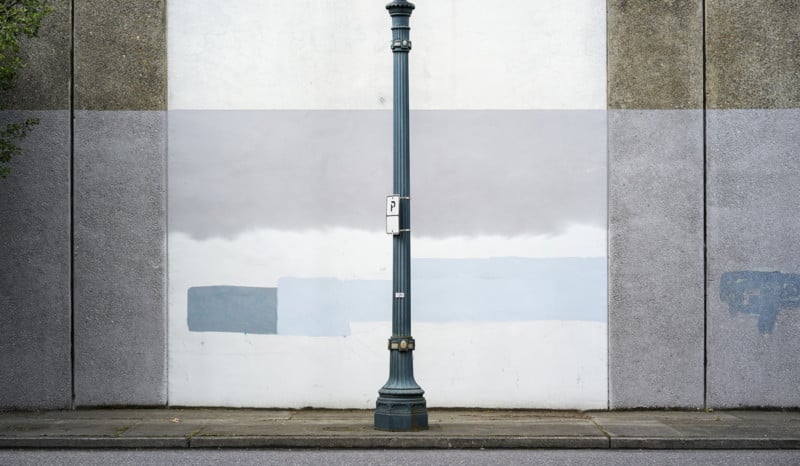
Parking lots displaying Rothko and Diebenkorn billboards in Portland Oregon? This is what I experienced during the 2020 covid pandemic.
Like everyone else, I had to change up my regular routine in 2020. After gyms and other forms of exercise closed, my wife and I began hiking through various neighborhoods in Portland, Oregon. It was in these rallies that I noticed this interesting phenomenon for the first time.
Like many urban areas, Portland has a fair amount of graffiti. There are really beautiful murals and drawings, which seem respected by the public and even by those who owned the walls on which this art appeared due to their lack of any deformation or damage. Over a long period of time, no one painted these pieces, nor did the landlords paint them. They were art for the public, and they were appreciated.
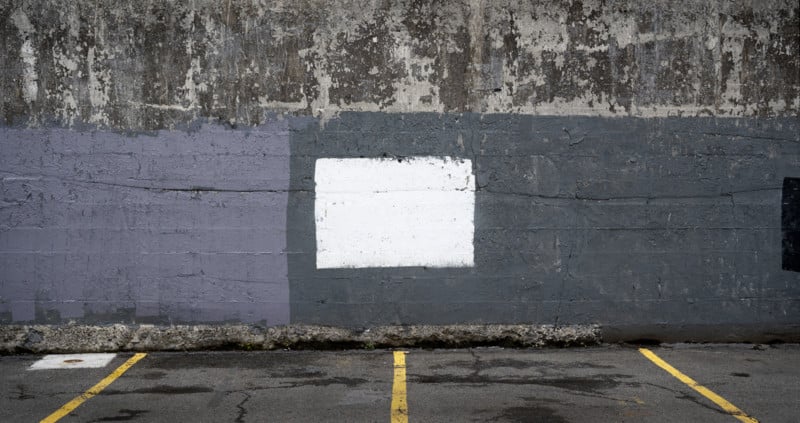
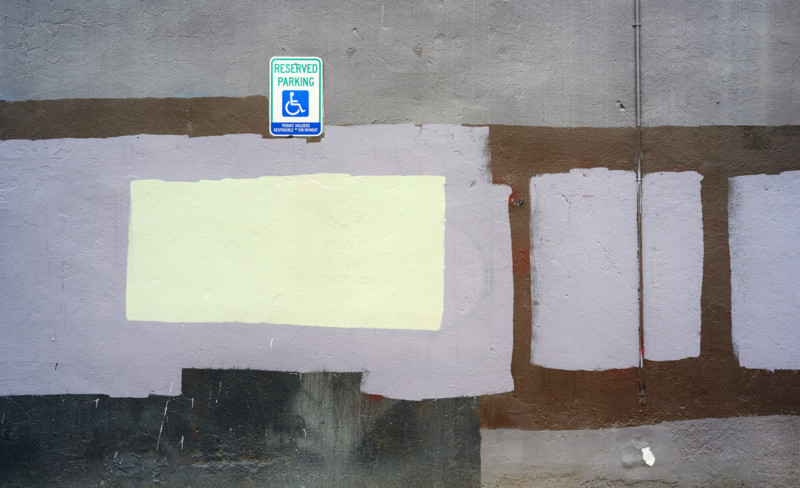
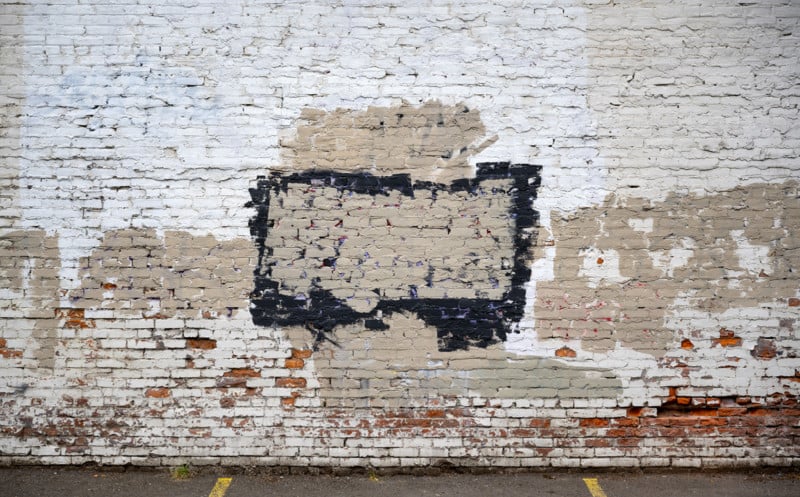
There is another form of graffiti that is not appreciated by the public, especially those who owned the walls on which it appeared. Created by people as a form of self-expression from someone, perhaps a political statement, illustration, design, or stylized sign (signature). It was this graffiti that led directly to the accidental creation of the Abstract Expressionist paintings that she encountered.
When realtors felt compelled to paint on graffiti they found offensive or unattractive, they used whatever paint they had on hand, or whatever paint they could get cheap. At first glance, it didn’t seem like much thought was given to the color and final look. But the owner or the final painter had to decide how much paint to paint. Will they just barely cover it or draw a more flattering size or shape? I just wonder how much thought they gave to this process.
The walls themselves had various textures and patterns that add to the look of the paintings. Smooth-cast molded concrete or stone walls themselves give way to painted polygons further defined by clean square edges. Brick walls often had a looser and less refined appearance. Although there were exceptions, some smooth walls were in disarray. The walls themselves added interesting elements, a brick or block pattern, windows, banners, and even the ground they stood on with yellow parking lines.
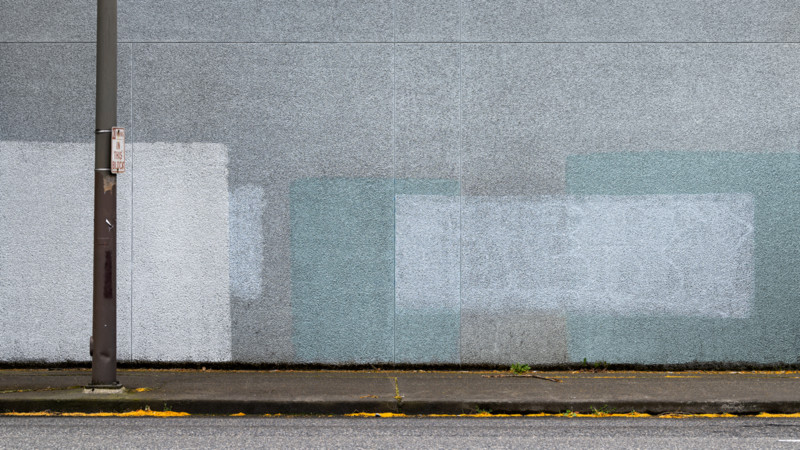
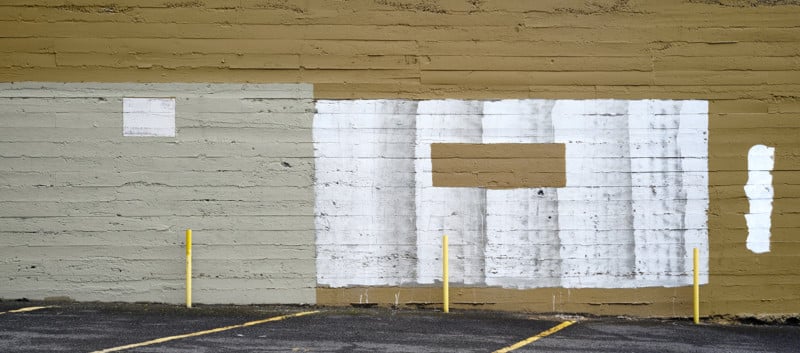
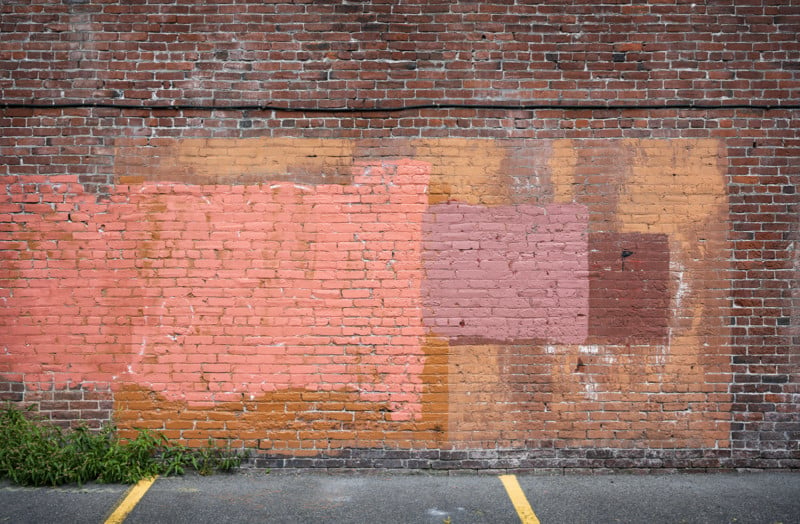
The battle of wills between the graffiti artist and the property owner goes on as layer upon layer of rough rectangles that will be placed on top of each new layer of graffiti. This results in colored rectangles above or next to other colored rectangles. I can’t help but notice and reflect on how this unintended collaboration could yield what was, after all, art.
For my part, I would take a note whenever I passed a promising wall, usually taking a shot of it with my cell phone, intending to come back later better equipped to photograph it. In the end, I just started taking a serious camera with me every run and doing a photo shoot, fearing that this scene would be painted before I could come back a few days later.
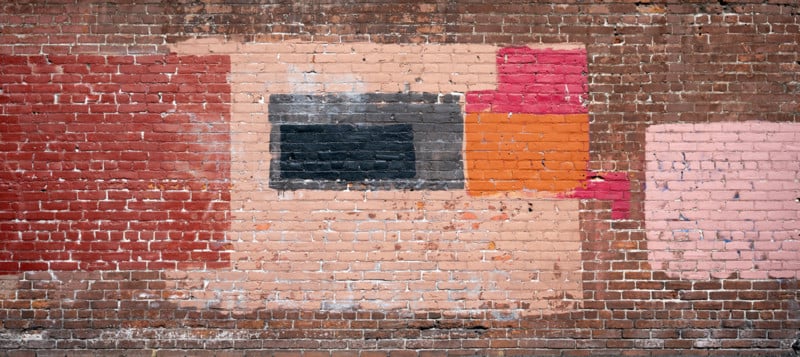
Next time I’ll bring a tripod and a set of lenses to shoot this art more deliberately, when the light is better or the parking lot is empty. I have come to a point where I know almost all the graffiti in every Portland parking lot west of the Willamette River. These travels and the resulting images developed into a major project. To date, there are more than 100 images in this portfolio.
But did I create this work, or am I just a custodian of other people’s work?
Unintended cooperation of strangers
To be fair, none of these photos are exactly as they appear on their walls. The camera software interprets the colors and contrasts, and I explain them more. I can emphasize a specific color or saturation, highlight differences between values, and of course choose to crop scenes. Then again, my research of these scenes and then putting them together into a body of work is more of a curator’s job. What about the other collaborators? What did they give to the last piece?
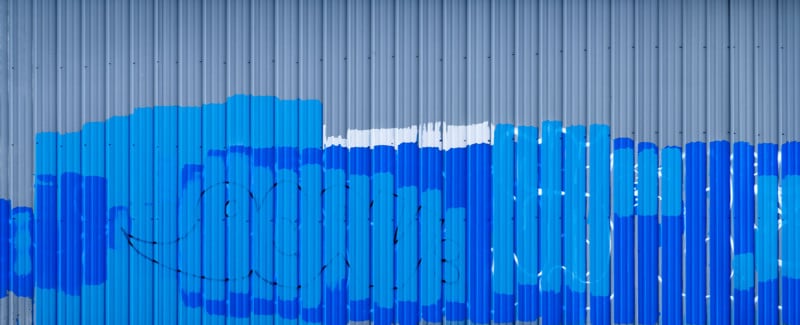
Each graffiti artist contributed to the work by choosing the location, the location on the wall, the size and shape of the graffiti, and layering the new graffiti on top of the old. And this wasn’t the work of just one graffiti artist, it must have been the work of many. And for all of them, not a single trace of their handiwork was left, their efforts were but a basic coating. But without them, there was no basis for the final work. As with all artists, their goal was self-expression, perhaps politically or simply to make their mark on the world.
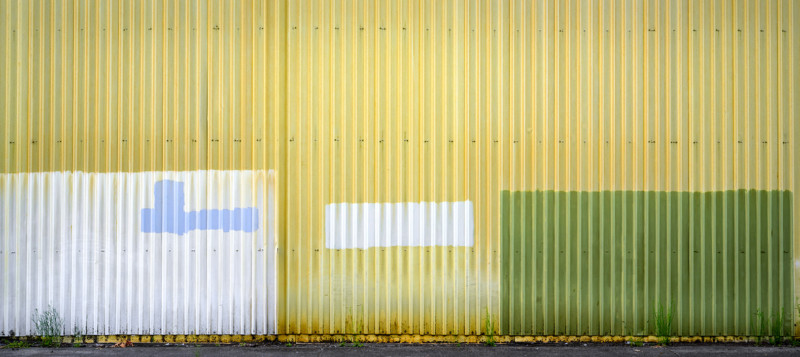
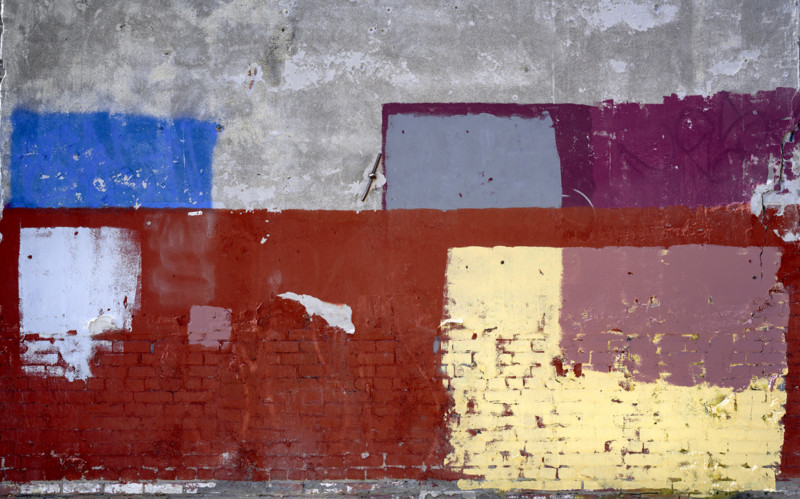
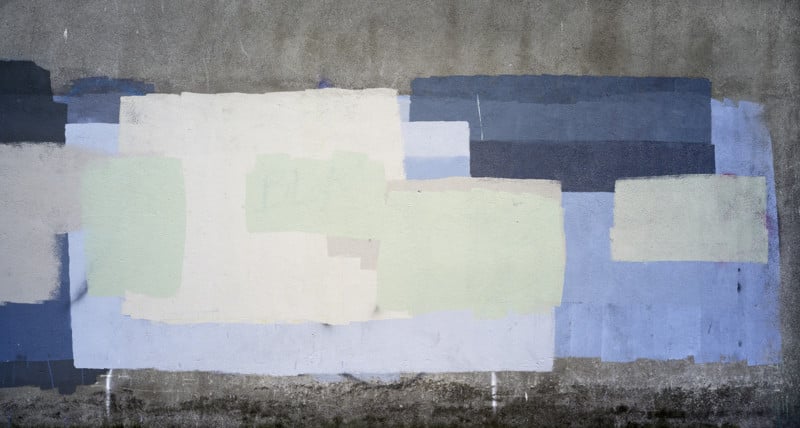
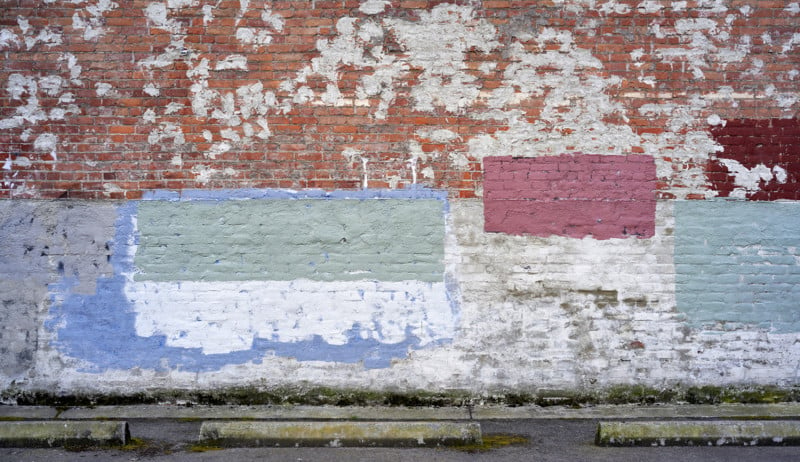
Property owners or managers contributed to the work through their accidental choice of paint color, their decision as to shape, and when to apply new paint to new paint. Their intention was purely for utility, to cover up what they found with something less hideous. You may be wondering how much thought has been given to aesthetics. At some point, have they thought to themselves, “This seems right, or should I do more”?
I probably photographed at least 100 walls. Some of the walls were so large that they presented many fixtures. I wonder, how many graffiti artists and how many property managers have put their marks on these walls? I suppose there were many more graffiti artists than property managers, and they were very prolific. All of these contributors have never met, and I have never met any of them. But in the end, they created something more interesting than just another blank urban wall. I think it’s all in the eye of the beholder, but to me, these strangers created art.
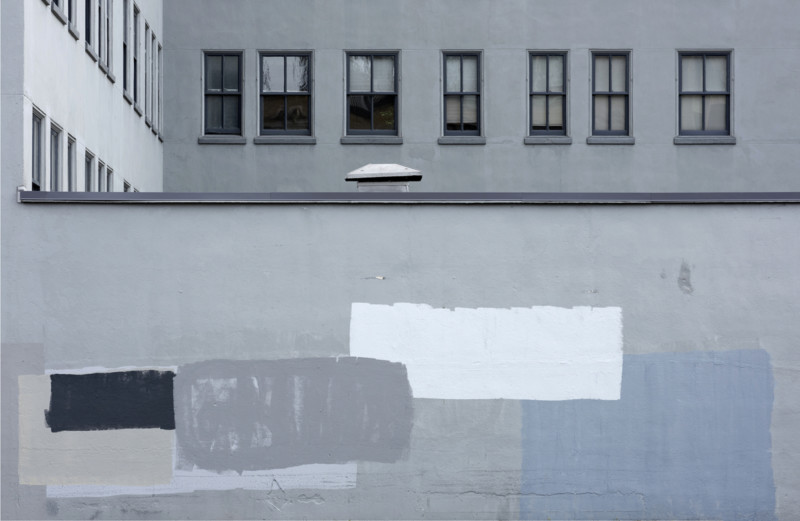
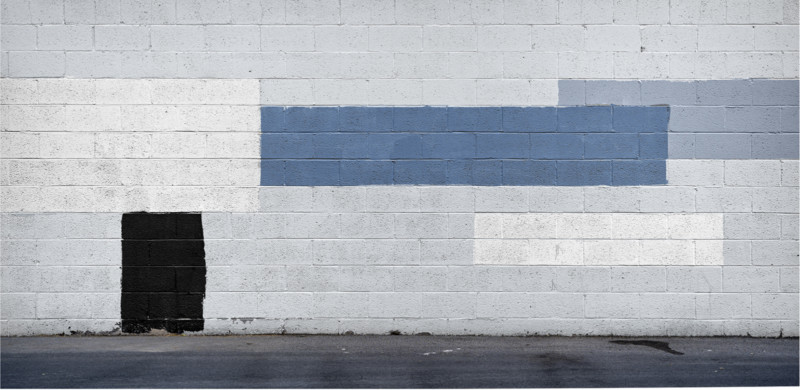
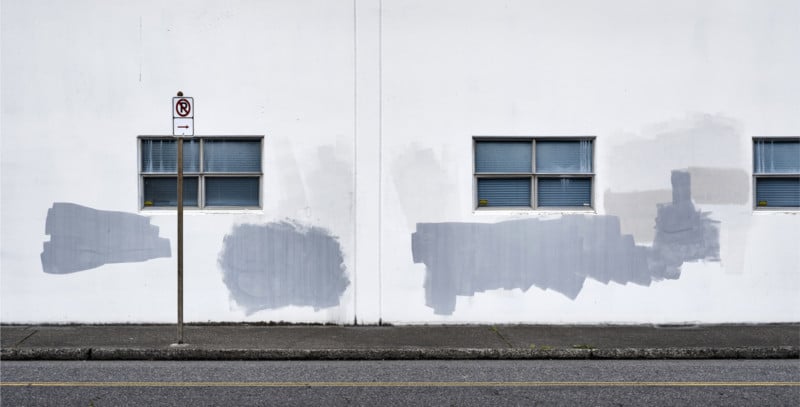
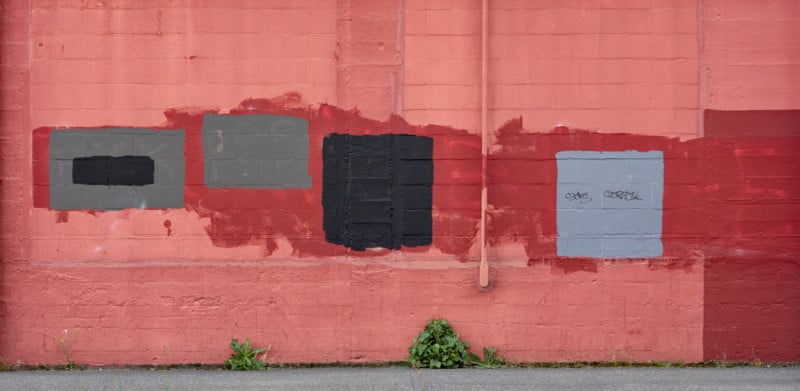
Almost two years after starting this project, I became familiar with nearly every blank or painted wall in Portland, or at least on the West Side. As I drive through town, I tell myself, sometimes out loud, “I got this!”
Some of the ones I took are painted again, and when that’s covered up, there’ll probably be a new picture available for me. But unfortunately, a lot of these walls are completely painted, so there is no immediate chance of these blank canvases at the moment. But maybe if you wait a while…
If you’d like to see more of these images, they can be found in the Paint portfolio on my website. There you will also see a large selection of other images.
About the author: Brian Kossoff is a Landscape and Still Life Photographer from Portland, Oregon. Kosoff’s work often treats scenes as if they were paintings, and his extensive portfolio includes images that cross the line between modern and abstract. More from Kosoff can be found on his website.

Comments
Post a Comment